sunnuntai 23. syyskuuta 2012

Pictures of the mystery kurotomesode

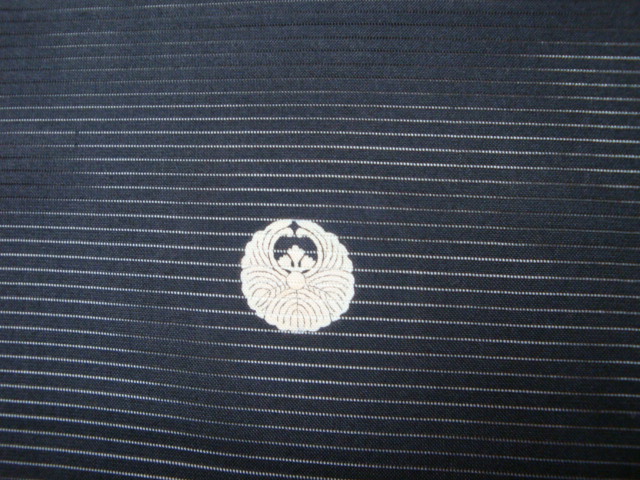
Hallo! Today I got around on taking pictures of the kurotomesode I got in the mail last week. I got to study it closer now and noticed that the false layers on the collar and the hem had been removed rather forcibly, tearing the lining fabric and causing a tear on the neck of the kimono. These are luckily not visible to the front. The biggest mystery is the pattern on the right breast.

Sorry about the blurry images, some adjustment in the camera are missmatched...

I know I'm not wearing an obiage, this was just a quick fitting.

Front

Back

Small holes in the lining where the false layer has been taken rather roughly.

Collar seam has ripped open.
Sleeves still have their false layers.

The pattern that puzzles me.

Just look at the detailing on these cranes! I love them!

torstai 20. syyskuuta 2012

Curious new tomesode

Hiya!
No, I have not forgotten you, just the learning of names of bones and structure of bones and muscles and where they are places (+ where they start, where they go and what is their function) in finnish and latin has had my days filled. But now things are slowing down so I can catch up with my hobbies.

I purchased a new kurotomesode and after the purchase I realized that one image showed the pine pattern also on the left breast... what? I didn't know tomesode could have pattern there...? So I'm taking photos and asking around what is it exactly.

Here's a preview, I got the kimono today, but due to unexpected rush, didn't get to take pictures yet.

Image is from kyotokiyous auction!
 

perjantai 3. elokuuta 2012

Types of a Kimono

No, I have not forgotten this little project of mine. Just got caught up with all that has been going in here. But this morning I found a few hours to continue this (and then go clean the bathroom). Sorry about not writing about the Dyed Patterns as I had promised, I ran into a wall with few of the pattern techniques and I'm still researching for confirmation/backup information and additional information on few technique patterns, but it's coming up. So, let's look at the standardized types of the kimono this time while I search more information on the dyed patterns. I am sorry for the inconvenience.

Types of Kimono


Uchikake is considered bridal kimono nowadays. Uchikake is a heavily embroidered and dyed outer kimono, that was historically used by the higher classes. Uchikake has the long furisode styled sleeves and it has padded hem. As the kimono is worn trailing, the padded hem helps to keep the hem in s beautiful shape. The pattern in uchikake covers all the kimono surface and the patterns are those considered celebrational for example cranes, flowers, fans, clouds and tortoise shell patten.
Uchikake in The Book of Kimono.
Uchikake by Wikipedia.


Shiromuku is an all white uchikake. Because pure white is also used in burial clothing, white wedding kimono has a woven patterns to distinguish that the wearer is not dead. Shiromuku as a term can also be used of a whole white wedding ensemble. Shiromuku can have a crimson colored lining, red being considered a youthful color suitable for a bride.
Shiromuku with tsuno-kakushi headpiece.


Shiromuku with wataboshi head piece.


Kakeshita is a bridal furisode. It has a slightly padded hem and it's worn trailing. Kakeshita is said to be solid color, but the term is also used to describe one and all bridal kimonos. Generally kakeshita is worn under the uchikake and tied with an obi, most likely to be the maru obi.

Mofuku or kimono for mourning is a solid black kimono with five family crests, or mon. During the Meiji period the closest family members of the deceased could have worn a full white mofuku. All accessories are solid black in a mofuku. Only tabi socks and the underkimono, juban, are white. In a kimono ensemble a solid black color is traditionally considered a sign of mourning.
Mofuku by Kimonocentral.
Shinishouzoku is the pure white, no patterned burial kimono. All accessories are pure white, thou small decorations are acceptable. Red obiage and undercollar is used for young women's burial kimono. Unlike all other kimonos, this one is dressed by placing the right on top of the left. Meaning that the siding of the collars in Japan divide between life and death,  as in western clothing it divides between man and woman.
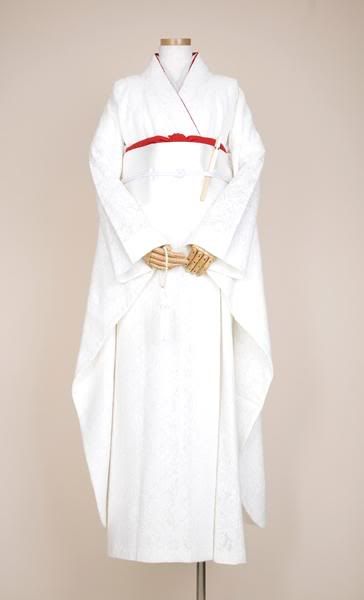
Burial kimono for a woman from IG.
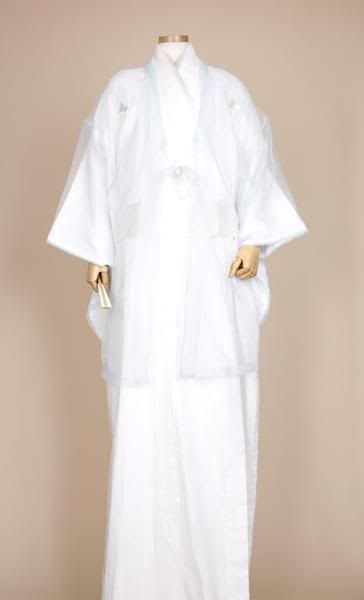
Burial kimono for a man from IG.

 Tomesode is the mort formal wear for a married woman. There are two kinds of tomesode, the kurotomesode (black tomesode) and the irotomesode (colored tomesode). Black is always more formal than the colored. The kurotomesode always have five family crests and should only be worn by married woman. Irotomesode always has atleast one mon in the centre back and can be worn by unmarried ladies as well, if they feel that they have grown out of the furisode. The pattern in tomesode runs in the hem of the clothing and while being dressed, never rises higher than the hips. The pattern runs over the seams, which is a sign of a formal kimono. How high the pattenr rises depends on the age of the wearer, the high rising patterns are considered more youthful.
Kurotomesode by my.opera.
Irotomesode by nippon.


Furisode is the formal kimono for an unmarried woman. The name of this kimono comes from the long, swinging sleeves of the kimono. The pattern of a furisode covers all of the kimono and it can be very brightly colored. The most decorated obi knots are also considered for the furisode ensemble. Nowadays also the obijime and obiage can be tied in very decorative styles. Furisode can be divided into three sub-categories depending on the lenght of the sleeve: Kofurisode (small swinging sleeve), Chufurisode (middle lenght swinging sleeve) and the Honfurisode (the true furisode with full lenght sleeves). As the girls school edjucation started the school uniform for girls was a kofurisode patterned in the yabane (arrow pattern) style with a hakama worn over it. Even today the style is used in graduation ceremonies.
Furisode by fashion.3yen
Furisode by The Book of Kimono


Houmongi or kimono for visiting. As a formal kimono it is acceptable to wear it for a wedding of a friend or a distant relative. It is said that the houmongi is the simplified version of the tomesode and the furisode. Patterning of a houmongi is rather free, but is usually consist of a decending pattern in the hem and on the sleeve/shoulder. The pattern size can be large or small. Houmongi can have mons. The pattern in a houmongi runs over the seams without breaking. The lining material in a houmongi can differ from the kimono fabric. The sleeve lenght can vary between 55cm-70cm.
Houmongi by fashion.3yen
Houmongi by japanmade

Tsukesage kimono is quite like the houmongi by means on pattern, but it is considered to be less formal. The difference between houmongi and tsukesage is sometimes so small, that they can be nearly inseparable. Nowadays a hybrid of houmongi-tsukesage combines the two kimono types into a multi-use kimono. How to tell them apart then? Unlike the houmongi, a traditional tsukesage is dyed before the kimono is constructed, meaning that the pattern stops/has a hiccup when it goes over the seams.
Tsukesage by yamatoku
Tsukesage from IG

Iromuji is a kimono without a pattern, but it can have a woven pattern and mons. Iromuji is never solid white or solid black. Bright, vivid colors are considered youthful and fitting for a younger woman and the broken tones and darker shades are more suitable for an older lady.
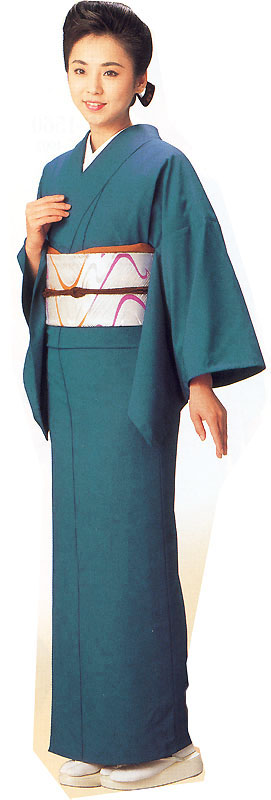
Iromuji by shop-japan
Iromuji by sweetstore-nihon


Komon is an all patterned kimono on which the size of the pattern can diverse between almost solid color to almost plate sized. In most komon kimono the pattern run differently between the sides of the kimono, meaning that on the other size run upside down when compared to the other side. There is a hybrid, tsukesage komon, on which the pattern runs the same on the whole kimono. The small patterned komon is called Edokomon and the pattern is so small that it looks solid colored until you inspect it on close range. Ebakomon is a very rare kimono type in which the striped run horizontally.
Komon from plumandblossom
Komon from IG Wiki

Yukata is a cotton kimono used after a bath or at a summer festival. Liza Dalby writes in her book Kimono - Fashioning Culture, that the japanese do not consider yukata to be a kimono, but a bathrobe, because of the lightweight cotton used to make it. Many vintage yukatas are white-indigo blue patterned. This type of blue is considered the symbol of lasting things, because the dye stayed in the cloth long without fading.
yukata from jlifeinternational
Wool has been growing into popularity as a kimono material. Wool kimono can be komon patterned or solid color. Lighter wools are reserved for summer and heavy wools are lined and used in the winter.
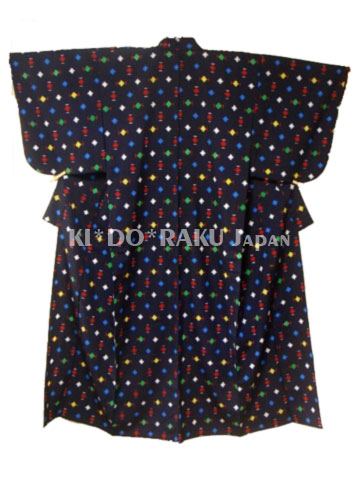
Wool kimono from Kidoraku Japan
References:
The Book of Kimono by Norio Yamanaka
Kimono - Fashioning Culture by Liza Dalby
ImmortalGeisha Forums
ImmortalGeisha Wiki

torstai 26. heinäkuuta 2012

Fai's kimono

I already posted images of this in my other blog, but being kimono related I decided to post it here as well. I made Fai's kimono from Tsubasa Reservoir Chronicle for a friend to wear at Animecon (Kuopio, Finland). The kimono is cotton, with blue sakura's appliquéd onto it. I still haven't made the bead embroidery on them, so it's still a work it progress, but it was wearable and recognizable, and the cosplayer wanted to wear them.
The sleeves I call "patchwork", because after I had sewn them in once, I realized that they were too narrow to fit his looooooong arms properly (I still think they could have been a teensy weensy bit wider). Othervice the kimono sat nicely on him. He made the accessories himself.

Still alive folks, still alive!

Gaaah, I haven't been able to "go kimono!" for a while (well, twice but no photographic evidence was gotten). Here's something I wore to my grandpa's 70th birthday:
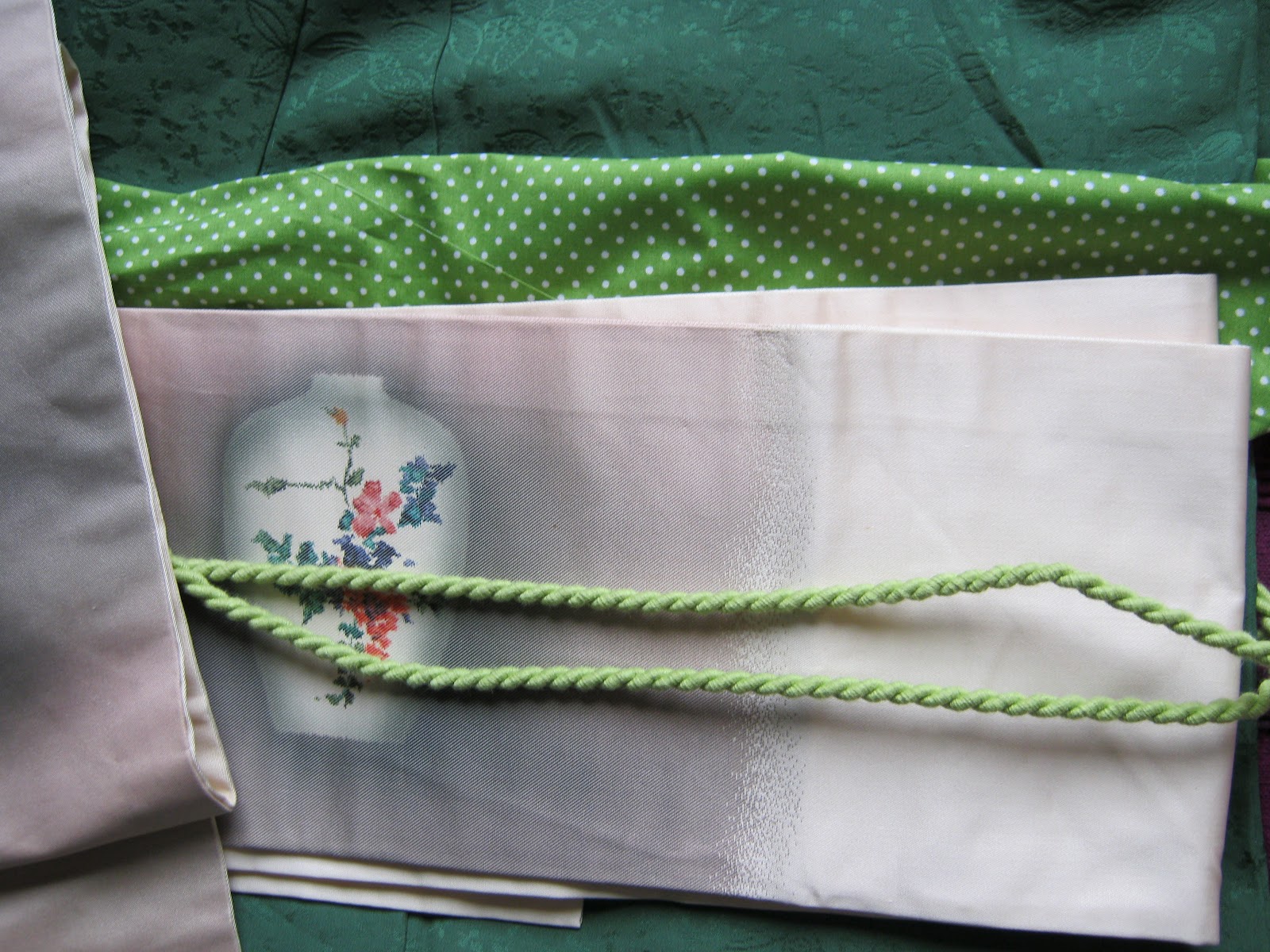
 Emerald green iromuji with cream colored nagoya. Polka dot obiage and lime green obijime.
I think my mom has a few images of me wearing the ensemble, but I haven't been able to get them yet.

tiistai 12. kesäkuuta 2012

Patterns in a Kimono; Woven patterns

So, this little information did leave behind scedule as my spring allergies finally caught up with me (dang, I thought I had evaded them!). But let's get down to bussiness.

Kimono patterns can be divided into two, the woven patterns and the dyed patterns. In terms of formality, the dyed patterns are more formal than the woven ones. Let's start with the woven patterns.

Woven patterns are symmetric and often also geometric, such as the stripes, checks and the splash pattern known as kasuri.

Kasuri is a tie-dye technique that originated in India. It is an ikat technique in which the warp threads can been dyed or solid color and the weft threads are tie-dyed in specific pattern and dyed with indigo to create a pattern once the fabric has been woven. Basic kasuri patterns are cross and parallel cross designs. The more complex are the pictorial kasuri, where pines, bamboo, plum blossoms, cranes, tortoises and so on are woven into the design.
Kasuri fabric by hillesondesigns.com

Woven patterns made in silk are usually broken down into the next categories:

Reeled silk known as meisen. Meisen has that "wind swept" look in the pattern. Meisen was first produced in the later part of the meiji period (1868-1910) through to around 1955. It's hight was in the Taisho period (1910-1926) throught to the early 1940's. They were inexpensive and first "off-the-rack" ready to wear kimono and haori. Meisen is a technique for producing kasuri (ikat) fabric cheaper, faster and in larger quantities than the traditional method allowed.

For more information and beautiful pictures, please see the Meisen Kimonos Exhibition.
Meisen silk by marcusonandhall.com

Heavy crepe silk known as omeshi. Kimono.fraise.net calls this weave the "fuzzy weave" and I have to agree on it, it does look fuzzy. Omeshi, also, is created with kasuri technique. Omeshi is a heavy crepe silk fabric with strongly twisted threads and firmer in it's texture than chirimen. Traditionally omeshi ranks highest of the woven fabrics in formality.
Omeshi silk by kimono.fraise.net

Spun silk known as tsumugi. Tsumugi originates from the farmers who wished to make use of the cocoons left over after they had shipped the best ones into the markets. They collected the floss from the left over cocoons and spin (tsumugu) it into kimonos for themselves and their families. Tsumugi as a fabric is one of the oldest, still used weaving techniques. It has a soft, but uneven texture and superficially resembles cotton.
Tsumugi silk bolt by petitjapon.com

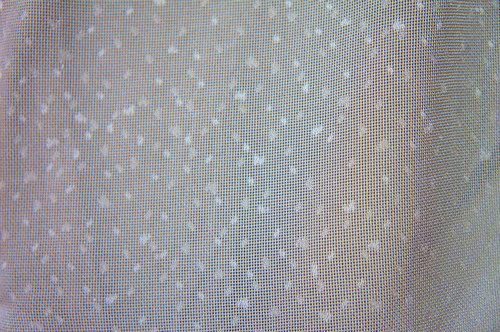
Silk gauze known as sha. The loose weave of this fabric makes it a see-through material.
Sha kimono by KyotoAntique.

Leno weave gauze known as ro. Just as sha, ro is very light fabric an distinguishable by the horizontal "stripes" that the weave creates on the surface of the fabric.
Ro kimono bolt by KyotoAntique.

Stripe pattern is called shima.
Shima yukata by shop-kimono.com

The check or lattice pattern called koushi.
Koshi kimono by narablog.com

Linen is known as the joufu in terms of patterns, which corrects my statement that I was not sure if I have ever seen a linen kimono. Now I have.
Linen joufu patterned kimono by narablog.com

Crepe silks known as the chirimen and kinsha. They have textured surface, similar to crepe, which is achieved by twisting the threads during weaving. Chirimen is heavier and stronger than kinsha. It's also a plain weave silks and drapes exceptionally well. Kinsha is a fine weaved, light crepe like silk.
Chirimen silk by nifwlseirff in Flickr.
Kinsha silk by nifwlseirff.hubpages.com

Rinzu silk is brocade like fabric with intricate pattern. Creating this pattern requires great skill and expertise and these silks are, as you might have guessed, one of the most expensive silks in Japan. The use of different types of warp and weft threads creates a contrast in the foreground and background adding luster and texture to the fabric. Rinzu fabrics can also have a dyed pattern on top of the woven pattern. These fabrics are soft to the touch and can vary in weight from the very light into the heavy wedding kimono.
Rinzu silk by Rakuten.

Urushi silks are created by weaving lacquered threads into the pattern creating an embroidery like pattern.
Urushi by Ruby Kimono.
Well, there's a few woven patterns that you might come across while searching kimonos. Ruby Kimono has a comprehensive list of kimono fabrics and patterns (and also motifs).

Reference used:
Kasuri Home - glossary
The Book of Kimono by Norio Yamanaka

And again, if you notice some obvious mistakes, please contact me. I am not perfect ;).

keskiviikko 6. kesäkuuta 2012

Kimono Fabrics

With this I'm treading on thin ice. I am not a textile historian or know textiles extensively, but I'm trying my best to open the kimono fabrics a little. Please understand this. Later today or tomorrow morning, I'll talk about kimono patterns.

Kimono Fabrics

Natural fabrics are the normally used kimono materials, but lately also synthetic materials are being used for example in odori kimonos, because they must endure lots and lots of use and washing. Silk and cotton are probably the most common ones you will come across when going kimono shopping. Wool seems to have come popular lately too.

Cotton yukata kimono.
Cotton is used solely as a yukata material. Cotton is a breezy material with a lot of use. The fibers of a cotton fabrics soak moisture well without making the fabric feel wet, which is one thing that makes cotton a nice fabric to use. The thickness of cotton fibers can diverse greatly, the thinest, longest and shiniest fibers are made into the finest cotton fabrics such as Sea Island and Egyptian. Cotton can be loosely woven, thin fabric or thick, durable material. Cotton does have bad ripping qualities, you can rip it by hand quite easilly. Taking care of cotton is also easy as you can wash it in an ordinary washing machine.


Silk iromuji kimono.
Silk is diversly used is formal wear and unformal wear depending on the pattern and the weave of the fabric. Silk fibers are gotten from the cocoon of the silkworm. Freshly made silk is very hard to rip by hand, it's only possible if the silk is sheer enough and you have the muscle of a bodybuilder. Sunlight makes silks brittle and silk curtains left in direct sunlight for a lenghty period will eventually be destroyed. Sunlight makes silks as stong as toilet paper. Silk has a nice shine in it as a fabric and it is breezy and pleasant fabric to wear. Water does not agree with silks and cleaning silks is nowadays recommended at dry cleaning. Also hard folds on silk fabrics tend to stay and are hard or even unironable from the fabric. Silk fabrics drape beautifully which is why they are used in evening dresses and blouses. Wearing silk kimono has it's drawbacks and being careful, but silk in itself has good qualities and the feeling of luxury that makes it all worth it.


Wool Kimono by Kidoraku Japan.
Wool is a natural fiber, which we get from the sheep's fur. Wool kimonos are unformal and patterns mostly geometrical. Wool is classified in terms of finest hair/fur of the animal and it's used to make mixed fabrics. Wool can be used to name other hair/fur related fabrics such as mohair, alpaca, cashmir and angora. To my knowledge, wool kimono is sheep's fur. Wool fabrics can be very diverse in terms of thickness, texture of the fabric and weave. Wool feels nice to the touch, can be a little strechy and the fibers soak moisture better than cotton. Wool also is hard to ignite, which is why it's used in interior decoration. Cleaning wool is considered easy, but washing it needs low temperatures and in fine wool fabrics dry cleaning is recommended. Wool can be cleaned by brushing the dirt of the fabric with a proper brush. Wool is sensitive to sunlight, moths and bleach.


Linen kimono from the 60s by so-meru.
Linen as a kimono material is mentioned in the Book of Kimono by Norio Yamanaka. I have to admit I have not seen a linen kimono being sold lately, but I have not been looking too closely lately. I cannot say where in formality a linen kimono would sit, but it's behind silk. As a natural fiber linen is collected from the flax plant's stem. Linen is a very breezy material and the fiber soaks moisture extremely well, so linen is a good material for warm climate. Linen has the bad quality of being easilly wrinkled, which is why there's often a bit of cottom mixed into the linen fabric to make it less easilly wrinkled. Linen is impossible to rip by hand. As a person who has tried this, I can say that my hands hurt before the fabric could rip.


Synthetic odori kimono.

 Synthetic materials are slowly gaining a foothold in kimonos, but they are considered unformal wear. Most synthetic kimonos are polyester mixed with some other fabric to give it little shine without losing the easiness of cleaning and maintenance. Komon kimono and odori kimono are the ones I've seen use synthetic fabrics. Depending on the weave of the fabric and the materials used to make the fabric, the breathability of the fabric can differ.


Other materials used in kimonos and traditional japanese clothes are bast, hemp and ramie.

Reference used:
ImmortalGeisha Forum
The Book of Kimono by Norio Yamanaka
Otavan Suuri Ompelukirja
so-meru