You can also see my awesome,
Näytetään tekstit, joissa on tunniste cultures. Näytä kaikki tekstit
lauantai 4. lokakuuta 2014
It's october with the Striped Sofia komon
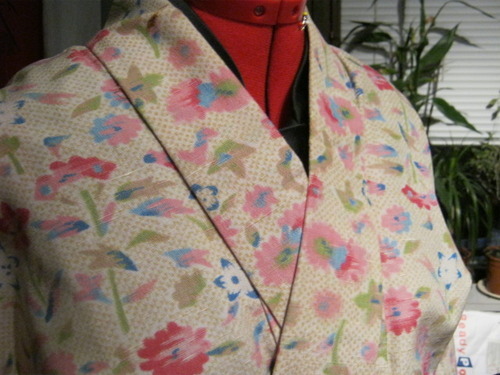
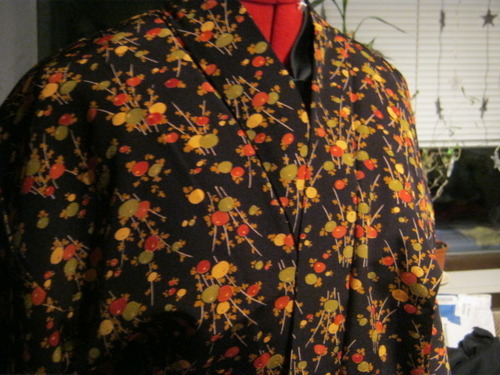
I made this komon from Ikea fabric. It's sturdy cotton, 5.99€/m. I'm very happy how it turned out. <3 Also, proper kitsuke pictures from our new appartment! There's so much room now for pictures! (and hobbies in general...)
You can also see my awesome,totally street cred Aino slippers!
You can also see my awesome,
sunnuntai 2. helmikuuta 2014
Yamatoku 20 Bundle of Doom
I was supposed to get my 10 pack on Friday, but the delivery man tried to deliver it to the wrong door and since my neighbour was not home, it was claimed "recipient not home" and was shipped back to Tampere. I should get that tomorrow.
In the meantime, I realized that I have not updated my 20 pack haul in here. Boo for me. I got to keep 15 as I sent 6 (yup, there was 21 items in my pack) to a fellow IGer, Miravisu.
A bingata haori that fits nicely! I've been waiting to get myself a good haori and now I have it!
Black'n'white hitoe komon. It has patterns of sake bottles, so this will be my choise for Midsummer Festival. (Even though I'm a teatotaller).
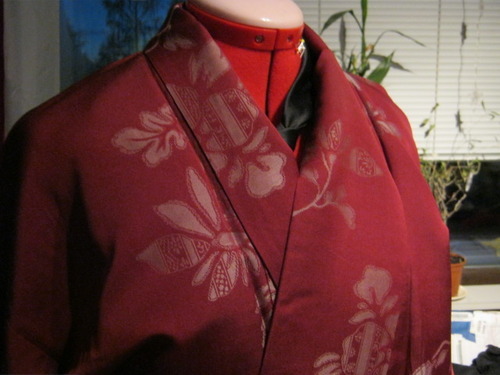
This wine red komon has a color fade on the front hem, but it's not too noticable. Fit is a bit too small.
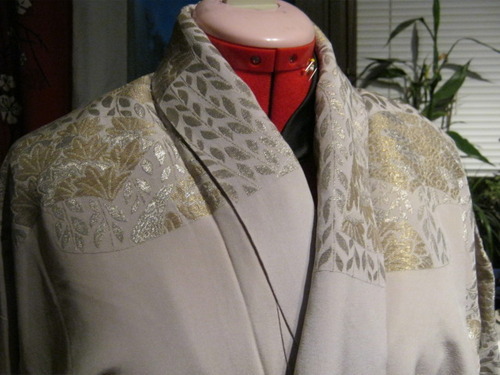
My breath was knocked off when I pulled this houmongi out of the pile. It's stunning and breathtaking and I didn't notice flaws (I might have to look again). It's lovely pearl/dove grey with gold and silver embroidery on both shoulders and hem.
Grandma's couch from the 70's. It's an orange based hitoe komon that still oddly pleases my eyes for some reason... I just have no idea what I should pair with it... I keep seeing green obi, but I'm not sure...
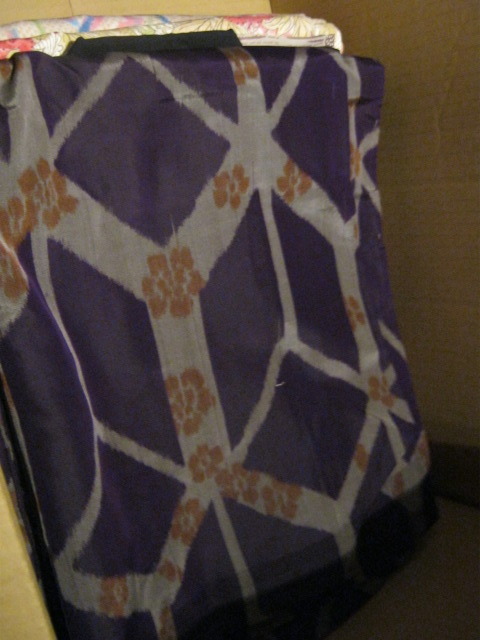
This kimono was surprisingly heavy, but then I realized that the entire hem was covered with gold thread embroidery. It has a very Marimekko like feel to it. It's a houmongi.
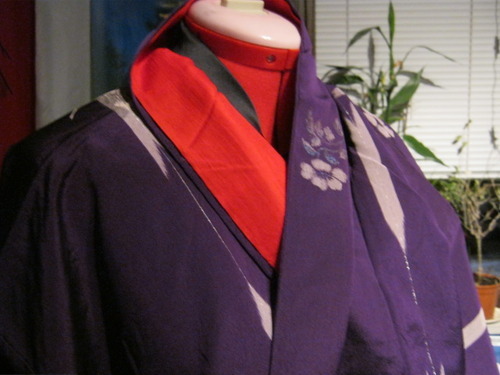
Possible taisho era komon with vermillion lining. The image does not do justice to the fact that that lining is RED. I mean the true, raw, passionate RED.
Peach colored komon. I wasn't sure at first if this was a houmongi or komon, but it has more "komon" qualities than houmongi, so I'm going to go with a more festive komon.
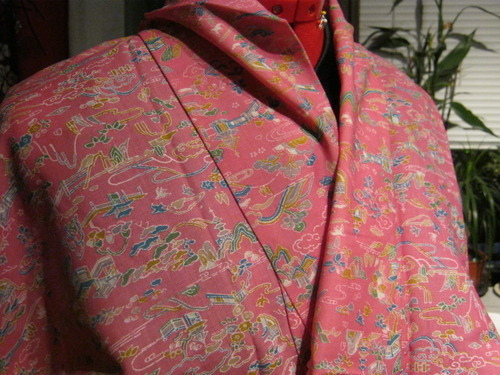
Pink, blue and brown with white accents komon that I believe has belonged to a younger girl, maybe age 15. It's lenght is ok, but it's really tiny widht wise. Also the colors feel more younger girl to me.
Flowery hitoe komon. Fit is ok. This didn't strike me, but I still like it.
Another possibly taisho era komon. There are spots on this one, but not too bad. Fit is too small. Has vermillion lining in the sleeves, so part of the lining might have been changed at some point.
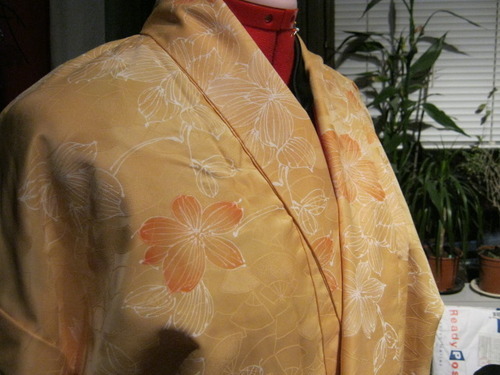
Apricot colored flowery komon. I like it. It's fancy, it fits. I just love this share of orange.
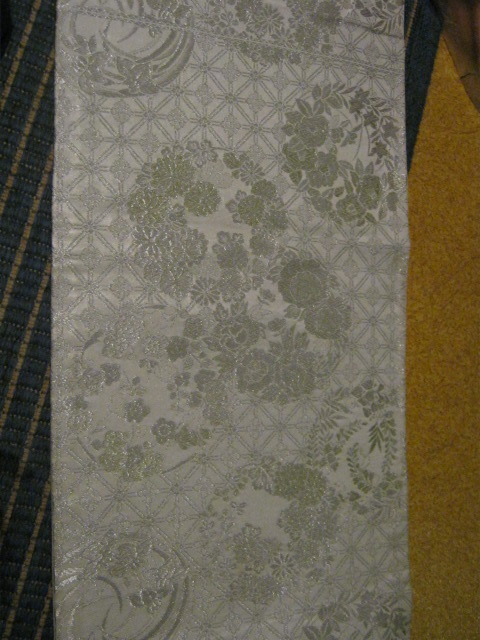
An embroidered fukuro obi. I still need to measure and inspect this more carefully wether to claim this fukuro or bridal maru. On the first look it looks more fukuro.
Another haori! This one is lined and needs adjusting before it fits nicely, but I love it.
I'll update images of the 10 pack haul later this week. Hopefully tomorrow the delivery man finds the correct door.
In the meantime, I realized that I have not updated my 20 pack haul in here. Boo for me. I got to keep 15 as I sent 6 (yup, there was 21 items in my pack) to a fellow IGer, Miravisu.
A bingata haori that fits nicely! I've been waiting to get myself a good haori and now I have it!
Black'n'white hitoe komon. It has patterns of sake bottles, so this will be my choise for Midsummer Festival. (Even though I'm a teatotaller).
This wine red komon has a color fade on the front hem, but it's not too noticable. Fit is a bit too small.
My breath was knocked off when I pulled this houmongi out of the pile. It's stunning and breathtaking and I didn't notice flaws (I might have to look again). It's lovely pearl/dove grey with gold and silver embroidery on both shoulders and hem.
Grandma's couch from the 70's. It's an orange based hitoe komon that still oddly pleases my eyes for some reason... I just have no idea what I should pair with it... I keep seeing green obi, but I'm not sure...
This kimono was surprisingly heavy, but then I realized that the entire hem was covered with gold thread embroidery. It has a very Marimekko like feel to it. It's a houmongi.
Possible taisho era komon with vermillion lining. The image does not do justice to the fact that that lining is RED. I mean the true, raw, passionate RED.
Peach colored komon. I wasn't sure at first if this was a houmongi or komon, but it has more "komon" qualities than houmongi, so I'm going to go with a more festive komon.
Pink, blue and brown with white accents komon that I believe has belonged to a younger girl, maybe age 15. It's lenght is ok, but it's really tiny widht wise. Also the colors feel more younger girl to me.
Flowery hitoe komon. Fit is ok. This didn't strike me, but I still like it.
Another possibly taisho era komon. There are spots on this one, but not too bad. Fit is too small. Has vermillion lining in the sleeves, so part of the lining might have been changed at some point.
Apricot colored flowery komon. I like it. It's fancy, it fits. I just love this share of orange.
An embroidered fukuro obi. I still need to measure and inspect this more carefully wether to claim this fukuro or bridal maru. On the first look it looks more fukuro.
Another haori! This one is lined and needs adjusting before it fits nicely, but I love it.
I'll update images of the 10 pack haul later this week. Hopefully tomorrow the delivery man finds the correct door.
keskiviikko 8. tammikuuta 2014
"Kimonos" in the 47 ronin
I've been watching trailers, costume featurette and images of the new 47 ronin movie with Keanu Reeves and I feel personally that even though the kimono for men is rather nice, the kimono for women is like a nail on a blackboard. So, after a long silence on my blog, I felt like I should write something about period clothing during that time.
47 ronin is a story that starts in the 18th century, or 1702, which is nearly the middle of Edo period (Tokugawa shogunate). It's the Golden Age of the Floating Worlds as merchants are becoming richer and money flows to the bordelles. Courtesans are becoming the Divas of the Day, the fashion icons that the ladies of the town are imitating. Ladies of court and nobility cling to old principles of dress. Women's clothing refomation happened in 1722.
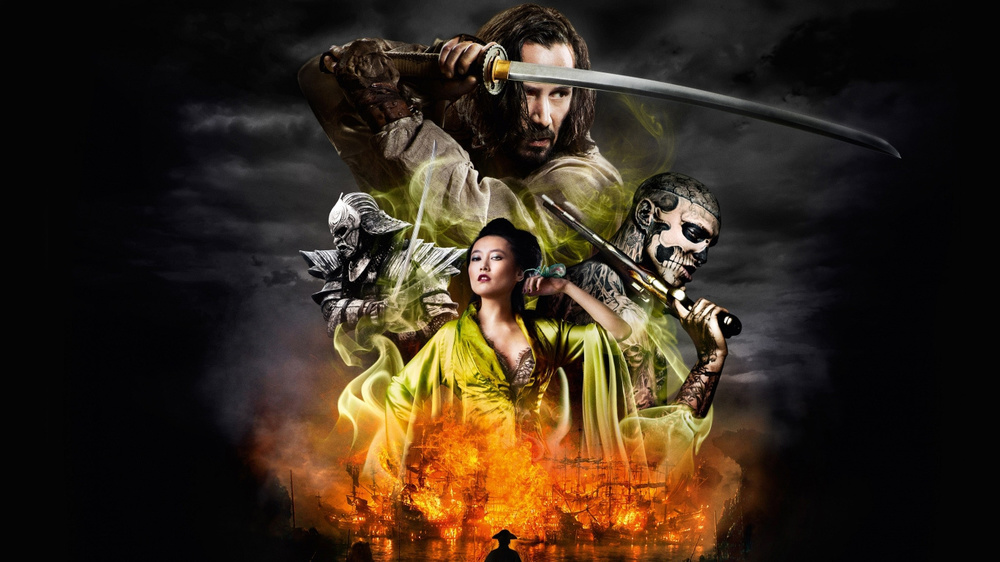
Let's have a look at the movie costumes shall we?
What I can see is very nice, off-the-shoulders dress with elizabethan sleeves and something that might be considered a waist cincer rather than actual obi, as it accentuates the shape of the waist and the pelvis. Also, the skirtlike hem is more chinese hanfu/ korean hanbok than Edo period kimono. Also, I'm a bit offended by the colored collar on the right. It was popular during mid-Edo period to wear black collar on your kimono so oil-stains from your hair would not show. Yellow kihachiyo collars could have been seen nearer 1900's on Tokyo's modern youth with Gibson Girl hairdo's.
I feel like that collar is offending me on a personal level. I mean what is it doing in a kimono? I can relate it to the collar worn by high government officials, warriors in court dress etc. but highly exaggerated. I don't think I've ever seen a woman wear such a garment, only men. Also, I keep wondering if the collars we see of the costume underneath are of a juban, or another kimono. If it's another kimono, all I can ask is, where the bloody hell are your undergarments!?
There's also no opening in the back of those sleeves. But during 1702, there was no hanging sleeves. Sleeve's detached themselves from the sides of the kosode somewhere around 1770, which was the final kickstart for the obi to expand to it's full glory.
Also, the musubi in the last image resembles the fukura suzume musubi except that the end is left hanging. I'd like to point out that during this time period, the obi is still barely over 6 inches wide. Women's obi in 1730 was about 10 inches and by 1800's it's widened to the foot wide obi we know today. But back to the topic. Obi was floppy and the knots were floppy. Why? Because most of the known helps for tying the obi today didn't exist! Meaning that tying the fukura suzume in 1702 was more or less impossible. Also the obi in the picture is clearly wider than 6 inches.
This would have been closer to the style of the day:
As you see, the obi is a loose knot, the sleeves are still relatively small, but the hem of the kimono needs to be hiked up for walking. The dressing is done in layers, you can spot atleast 3 layers on the bottom right image.
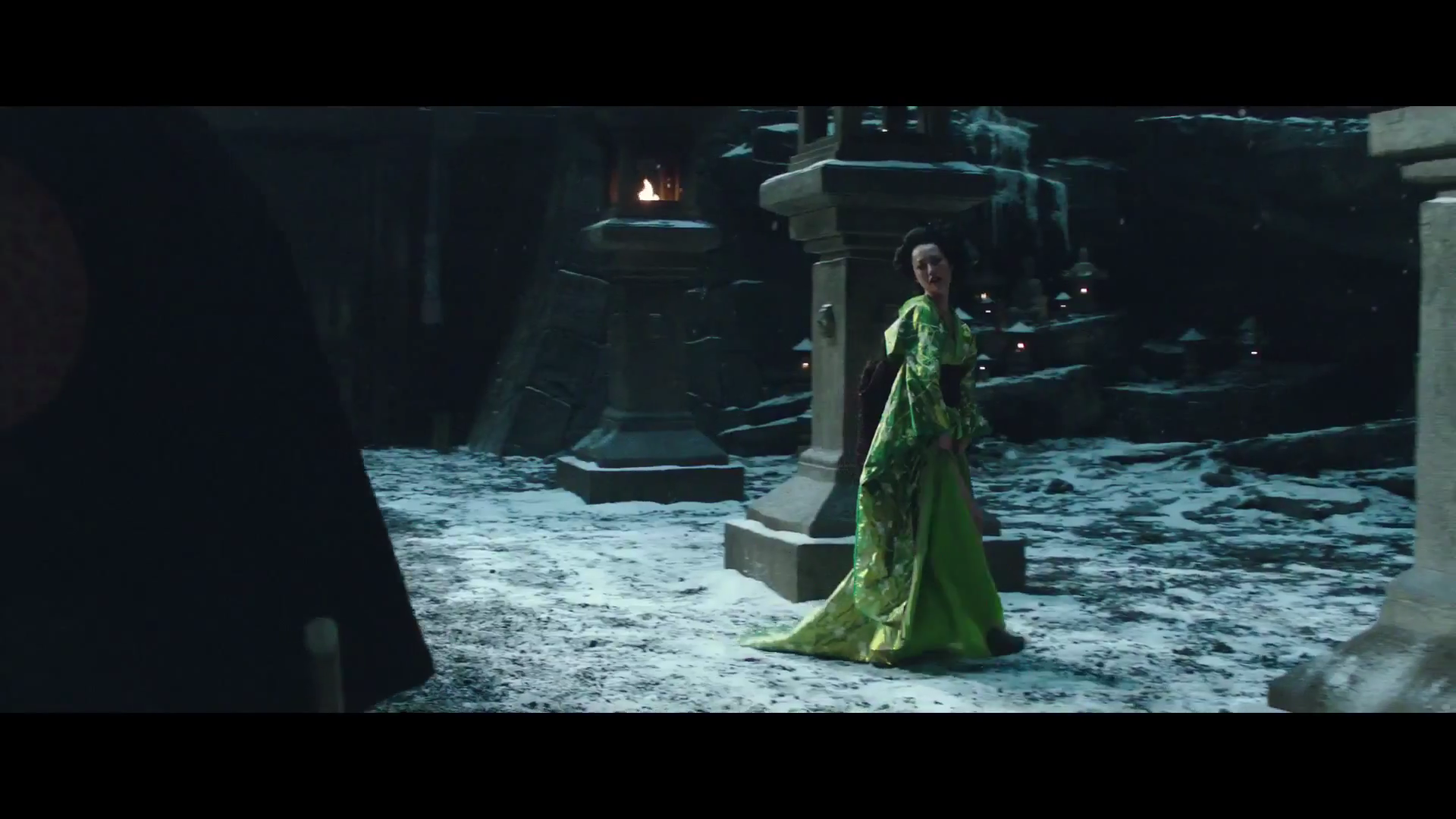
I seriously hope this scene was flipped for the featurette or then the people are The Walking Dead. I keep wondering if the costume of Mika is supposed to resemble the junihitoe which was the official dress for ladies of the court. There's some sleeve similarities, but I am not even going to talk about the collar.
Ladies in the background are wearing dildos on their heads.
I'm not saying it's not accurate. There was this sort of hairstyle in the history. And they actually did do some research on courtesans (WHOA), because this was the hairstyle used by courtesans during Muromachi period. Also the ladies seem to be wearing something that looks like men's kataginu on top of their kimono. And again with the long sleeves.... Obis atleast are more period accurate.
Need I even start with this? First of all there's the cleavage. Until westernazation the japanese did not consider the cleavage worth the erotic symbol it's in the west. "You got boobs, so what?". What was erotic in Japan those days was the back of the neck, the underside of the wrist and the peak of naked toes under the many layers of a courtesans kimonos. Not boobs. And I'm sure brassiere was not invented until 1900's after the decline of the corset. I could also say something about those medieval princess sleeves you can easilly spot on the top image.
Also the kimono in the lower image resembles more hanfu, with the flowing skirt hem, than an actual kimono of the feodal Japan. Which is a shame because the men's costumes look so nice. There's probably mistakes on those too, but I was practicly blinded by the shock from the ladies kimonos.
I shall end my rant now.
47 ronin is a story that starts in the 18th century, or 1702, which is nearly the middle of Edo period (Tokugawa shogunate). It's the Golden Age of the Floating Worlds as merchants are becoming richer and money flows to the bordelles. Courtesans are becoming the Divas of the Day, the fashion icons that the ladies of the town are imitating. Ladies of court and nobility cling to old principles of dress. Women's clothing refomation happened in 1722.
Let's have a look at the movie costumes shall we?
What I can see is very nice, off-the-shoulders dress with elizabethan sleeves and something that might be considered a waist cincer rather than actual obi, as it accentuates the shape of the waist and the pelvis. Also, the skirtlike hem is more chinese hanfu/ korean hanbok than Edo period kimono. Also, I'm a bit offended by the colored collar on the right. It was popular during mid-Edo period to wear black collar on your kimono so oil-stains from your hair would not show. Yellow kihachiyo collars could have been seen nearer 1900's on Tokyo's modern youth with Gibson Girl hairdo's.
I feel like that collar is offending me on a personal level. I mean what is it doing in a kimono? I can relate it to the collar worn by high government officials, warriors in court dress etc. but highly exaggerated. I don't think I've ever seen a woman wear such a garment, only men. Also, I keep wondering if the collars we see of the costume underneath are of a juban, or another kimono. If it's another kimono, all I can ask is, where the bloody hell are your undergarments!?
There's also no opening in the back of those sleeves. But during 1702, there was no hanging sleeves. Sleeve's detached themselves from the sides of the kosode somewhere around 1770, which was the final kickstart for the obi to expand to it's full glory.
Also, the musubi in the last image resembles the fukura suzume musubi except that the end is left hanging. I'd like to point out that during this time period, the obi is still barely over 6 inches wide. Women's obi in 1730 was about 10 inches and by 1800's it's widened to the foot wide obi we know today. But back to the topic. Obi was floppy and the knots were floppy. Why? Because most of the known helps for tying the obi today didn't exist! Meaning that tying the fukura suzume in 1702 was more or less impossible. Also the obi in the picture is clearly wider than 6 inches.
This would have been closer to the style of the day:
As you see, the obi is a loose knot, the sleeves are still relatively small, but the hem of the kimono needs to be hiked up for walking. The dressing is done in layers, you can spot atleast 3 layers on the bottom right image.
I seriously hope this scene was flipped for the featurette or then the people are The Walking Dead. I keep wondering if the costume of Mika is supposed to resemble the junihitoe which was the official dress for ladies of the court. There's some sleeve similarities, but I am not even going to talk about the collar.
Ladies in the background are wearing dildos on their heads.
I'm not saying it's not accurate. There was this sort of hairstyle in the history. And they actually did do some research on courtesans (WHOA), because this was the hairstyle used by courtesans during Muromachi period. Also the ladies seem to be wearing something that looks like men's kataginu on top of their kimono. And again with the long sleeves.... Obis atleast are more period accurate.
Need I even start with this? First of all there's the cleavage. Until westernazation the japanese did not consider the cleavage worth the erotic symbol it's in the west. "You got boobs, so what?". What was erotic in Japan those days was the back of the neck, the underside of the wrist and the peak of naked toes under the many layers of a courtesans kimonos. Not boobs. And I'm sure brassiere was not invented until 1900's after the decline of the corset. I could also say something about those medieval princess sleeves you can easilly spot on the top image.
Also the kimono in the lower image resembles more hanfu, with the flowing skirt hem, than an actual kimono of the feodal Japan. Which is a shame because the men's costumes look so nice. There's probably mistakes on those too, but I was practicly blinded by the shock from the ladies kimonos.
I shall end my rant now.
tiistai 4. kesäkuuta 2013
It's all Asian right?
NO.
The point of today's post is about cultural diversity in traditional clothing. In Asia. Meaning mostly China, Japan and Korea. These three get mixed up all the time. What made me write this post is the fact that I'm actually rather tired of hearing "chinese" when in full kimono. And while explaining, get the comment of "Well, it's Asian so I wasn't that far off!". No, you were just a whole culture off.
China
First let's look at China, since the the kimono of Japan and the hanbok of Korea both shaped themselves from it.
Hanfu
Hanfu, like the kimono, has many varieties and formalities. There are probably people more knowledgable than me on this, and even a small google search will give you quite a lot of answers. It is said that hanfu's history might go back even as far as three millenias.
The hanfu also has three layers of formality: Informal, semi-formal and formal. A typical hanfu outfit is two to three layers, but during formalities, there can be more layers.
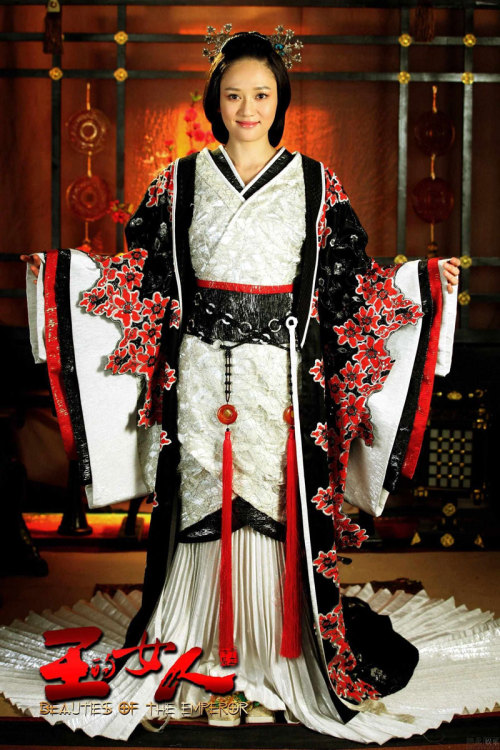
There are two types of formal wear, shenyi. The top one is for men and the bottom one is for women. You can easilly spot the differences in the sleeves and how the hem is shaped. The female version is a lot more of the "wrap-around" kind than the men's. The women's shenyi portrayed in this picture is called a guju and the men's shenyi a zhiju.
This is a type of informal wear for women, a ruqun. You can clearly spot the similarities of the garment to the Korean hanbok.
Cheongsam / Qípáo
Most people I've met associate the cheongsam as the traditional garment of China, even if the garment was created in 1920s in Shanghai for upperclass ladies and sociaties.
Nowadays it's still widely in use as uniforms and workclothes. Some airline hostess' uniform is a cheongsam. The garment in itself bears a striking resemblance to the traditional vietnamese áo dài:
| Áo dài |
Korea
Hanbok / Chosŏn-ot
Korean traditional dress is typically a short vest/jacket and a long skirt. There are two different names for the same garment as the hanbok is used in the South and Chosŏn-ot is used in the North. Hanbok was born during the Chosŏn dynasty. The high officials and the aristocracy changed their styles according to foreign styles, but the commonwealth kept using the garment we today know as the hanbok. It's used in semi-formal and formal occasions nowadays.
You can see how much the style resembles the informal chinese ruqun dress, with the jacket and the skirt.
Japan
Kimono
Japan probably has the most known (appart from the cheongsam) traditional dress of these three, the kimono. In western speech a wrap-around clothing is instantly named a "kimono". A kimono is T-shaped garment that one wraps around to dress and ties it with a wide belt called obi. Female kimono is a lot longer than the men's and it varies in styles and formalities. Kimono comes with three formalities, just like the hanfu: Informal, semi-formal and formal.
For more information on kimono, you can go to my post on types of Kimono
I could go on an on, about the Asian traditional dresses but let's stop for now. The hanfu, section became longer than I wanted, but there was just so much information... I hope I made it clear about which dress goes to which culture. Thank you and have a nice summer day!
Tilaa:
Blogitekstit (Atom)